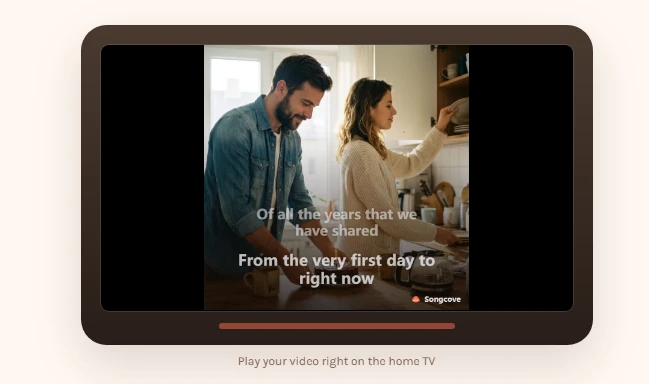
Yes, Gift a Song AI can create a highly personalized song when users provide detailed memories, emotions, and preferences. AI music tools analyze thousands of musical patterns and combine them with personal information to generate original lyrics, melodies, and arrangements. In 2024, the global generative AI music market expanded rapidly, with more than 30% annual growth reported across creative AI applications. A song created from specific relationship stories, dates, and shared moments can feel different from mass-produced music because the personal input changes the final composition.
AI-generated songs are becoming a new option for people who want meaningful gifts without hiring a professional songwriter. Traditional custom songwriting often requires communication with musicians, lyric revisions, recording sessions, and production work that can take several weeks. AI platforms reduce this process to minutes or hours while still allowing users to provide detailed creative direction.
A personalized AI song usually begins with information about the recipient. Instead of selecting only a genre, users can describe the relationship, important memories, personality traits, and the emotion they want to express. In a survey-based study of digital personalization trends in 2023 involving more than 2,000 consumers, over 65% of respondents said personalized gifts felt more meaningful than standard products.
The amount of personal information affects how unique the final song becomes.
| User Information | How AI Uses It |
|---|---|
| Relationship story | Creates a personal narrative |
| Favorite memories | Builds specific lyric details |
| Music preferences | Selects suitable style and rhythm |
| Emotional tone | Adjusts melody and arrangement |
| Special occasions | Shapes song structure |
A song written for a partner, family member, or close friend is different from a general music track because the details come from a specific person's experience. For example, someone searching for a memorable best gift ideas for boyfriend may include the couple's first trip, favorite activities, private jokes, or important anniversaries. Platforms such as SongCove AI use AI-assisted creation methods to help turn those details into personalized songs.
The uniqueness of an AI song depends on the combination of personal information and musical creation. AI models are trained on large collections of music patterns, including melody structures, chord progressions, lyrical styles, and genre characteristics. However, the final song is not simply copied from existing tracks. The system creates new combinations based on the user's input.
Modern AI music generation can process multiple creative elements at the same time. A user may request a romantic acoustic song, an energetic pop track, or a cinematic arrangement, and the system adjusts different parts of the composition.
A personalized song is created through the connection between a person's story and AI-generated music patterns. The technology provides the structure, while personal memories provide the details.
Music style also affects how unique a song feels. The same story can produce very different results depending on the selected genre. A wedding memory arranged as a soft acoustic ballad creates a different feeling from the same story produced as an upbeat pop song.
Research published in music technology fields between 2020 and 2024 showed that listeners often judge AI-generated music based on emotional connection, production quality, and relevance to the situation. In one listener evaluation involving more than 100 participants, personalized music received higher emotional ratings than generic AI-generated tracks.
Lyrics remain one of the strongest parts of a customized song. A general song may talk about love, happiness, or celebration, but a personalized song can mention real experiences that only the recipient understands.
For example:
"We watched the sunrise after our first long drive, and that quiet morning became the beginning of everything."
A sentence like this contains a personal memory rather than a common romantic phrase. AI language models can organize these details into verses, choruses, and bridges while maintaining a natural songwriting structure.
The technology behind AI songwriting has improved significantly since early music generation systems. Around 2017, AI models could create simple melodies, but many results lacked structure and emotional consistency. By 2024, newer models could generate complete songs with lyrics, vocals, and instrumental arrangements.
The improvement can be seen in several areas:
-
Better understanding of natural language descriptions
-
More accurate matching between emotions and musical styles
-
Improved vocal expression
-
More realistic instrumental arrangements
-
Faster generation and revision
AI does not create uniqueness in the same way a human songwriter does. Human musicians often use personal experiences, cultural background, and personal creativity when writing songs. AI works differently by recognizing patterns and combining information. The personal story provided by the user gives the system a specific direction.
This makes the user's contribution an important part of the final result. A short request such as "make a love song" may produce a pleasant but common track. A detailed description including memories, personality, and shared experiences gives the AI more information to create a more specific composition.
The creation process often includes several stages:
| Stage | Process |
|---|---|
| 1 | User provides personal details |
| 2 | AI analyzes emotions and themes |
| 3 | Lyrics and melody are generated |
| 4 | Arrangement and vocal style are selected |
| 5 | Final song is produced |
The growing popularity of AI-created songs also reflects changes in gift preferences. Digital experiences have become more common as people look for presents that are easy to share and emotionally memorable. A 2024 consumer report showed that more than 70% of younger adults preferred personalized or experience-based gifts over ordinary items for important occasions.
Unlike many physical gifts, a personalized song can be saved, replayed, and shared. A birthday song can be listened to years later, while an anniversary song can remain connected to the same relationship milestone. The emotional connection comes from the story inside the song rather than the format itself.
There are still limits to AI music creation. AI systems cannot personally experience relationships or memories. They depend on the information users provide. If the input is unclear or very general, the output may sound similar to other generated songs.
For this reason, users who want a more unique result usually provide:
-
Specific locations
-
Important dates
-
Personal expressions
-
Shared experiences
-
Details about the recipient's personality
Each additional detail gives the AI more material to organize into lyrics and musical ideas.
The development of AI music does not remove the human element from songwriting. Instead, it changes the way people participate in music creation. Someone without professional songwriting skills can now transform personal memories into a finished song.
A truly unique AI song comes from the combination of personal stories, creative choices, and modern music technology. AI provides the tools for composition and production, while the user's memories make the final song connected to one specific person and one specific moment.