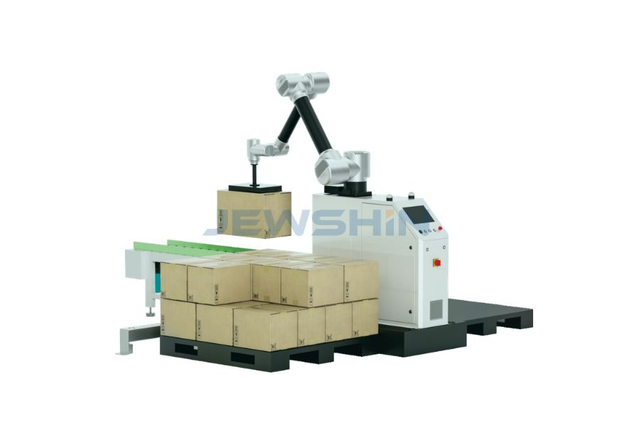
Automatic packaging machines improve manufacturing speed by replacing repeated hand movements with controlled feeding, filling, sealing, labeling, case packing, and pallet handling. A line running at 60 packs per minute can process 28,800 packs during an 8-hour shift before planned stops are counted. If manual packing averages 10–15 packs per worker per minute, comparable output may require four to six people. Automation can also reduce labor cost per finished unit because one or two operators can supervise several linked processes. In a 2024 production model, reducing packaging labor from five workers to two while tripling hourly output cuts direct labor cost per pack by about 87%, before equipment depreciation, maintenance, electricity, and financing are included.
Manufacturing speed is usually limited by the slowest operation in the line. A filling machine producing 70 units per minute gains little from that capacity when manual carton loading handles only 35. At 35 units per minute, an 8-hour shift has a theoretical output of 16,800 units; matching a 70-unit upstream rate raises the figure to 33,600. The difference explains why manufacturers often automate packaging after increasing filling, processing, or assembly capacity.
Once product flow reaches packaging, repeated handling consumes more time than many factories expect. An employee may need to pick up a product, orient it, open a carton, insert the product, close the carton, apply a label, and move it to the next station. If the full sequence takes 12 seconds, one workstation has a theoretical capacity of 300 units per hour, and a 15% loss from replenishment and routine interruptions lowers practical output to about 255.
Automatic feeding removes much of that variation because conveyors, guides, indexing systems, sensors, and servo-controlled mechanisms maintain predetermined spacing. A machine cycling once every 1.2 seconds can theoretically process 3,000 units per hour, although actual production depends on product supply, stoppages, and rejects. Even at 80% utilization, output remains about 2,400 units per hour, which changes how many employees are needed per thousand packages.
Rated machine speed should not be treated as actual factory output. A 100-pack-per-minute specification produces 48,000 theoretical packs in an 8-hour shift, but 75% effective utilization produces 36,000. Material changes, cleaning, minor stops, product shortages, inspection failures, and maintenance account for much of the 12,000-unit difference.
Labor economics become easier to compare when cost is calculated per acceptable package rather than per employee. Assume five packaging employees each cost $24 per hour after wages and employer-related labor expenses. The line spends $120 per hour on direct packaging labor. At 1,200 acceptable packs per hour, labor represents $0.10 per pack.
An automated line staffed by two employees at the same $24 hourly cost spends $48 per hour. If it produces 3,600 acceptable packs per hour, direct labor falls to about $0.013 per pack. That is an 87% reduction in labor cost per package in this model, although maintenance, utilities, depreciation, financing, and spare parts must still be added before calculating total packaging cost.
| Operating measure | Manual line | Automated line |
|---|---|---|
| Packaging employees | 5 | 2 |
| Labor cost per employee/hour | $24 | $24 |
| Total direct labor/hour | $120 | $48 |
| Acceptable packs/hour | 1,200 | 3,600 |
| Direct labor cost/pack | $0.100 | $0.013 |
| 8-hour theoretical output | 9,600 | 28,800 |
Higher hourly capacity matters because packaging labor is not limited to placing products in containers. Workers also replenish film, cartons, labels, adhesive, and tape; clear jams; remove rejects; inspect seals; move finished cases; and record production information. Automation does not remove every task, but it can move employees away from repeated unit-by-unit handling and toward supervision, replenishment, inspection, maintenance support, and changeovers.
That staffing difference becomes larger during multi-shift operation. A manual line requiring five employees per shift needs 10 operator-shifts across two daily shifts. An automated line requiring two needs four. Over 250 operating days, the difference equals 1,500 eight-hour operator-shifts, or 12,000 labor hours, before absenteeism, overtime, recruitment, and training are considered.
Labor reduction should be measured in hours per 1,000 saleable packs. Headcount alone can give a poor comparison because a three-person automated line producing 6,000 packs per hour may use less labor per unit than a two-person manual station producing 700.
Speed also depends on whether packaging operations are connected. Separate machines can create waiting between primary packaging, labeling, case packing, case sealing, and pallet preparation. Integrated end-of-line packaging equipment can connect case handling, sealing, conveying, and downstream operations so products spend less time waiting for manual transfer. If workers previously spend 15% of a shift moving cases between stations, automated conveying can return part of that time to productive work.
Quality control affects the same calculation because gross machine output is not saleable output. Suppose two lines each produce 4,000 packs per hour. A line with a 3% reject rate delivers 3,880 acceptable packs; reducing rejects to 1% increases acceptable output to 3,960 without increasing nominal machine speed. Across 2,000 operating hours per year, the difference is 160,000 additional acceptable packages.
Automated control can help maintain repeatable package length, seal position, label placement, product count, and fill settings. Sensors can detect missing products, incorrect spacing, absent labels, unreadable codes, or packages outside configured limits. Performance depends on product characteristics and inspection equipment, so a manufacturer should validate reject rates using production samples rather than assuming automation will produce a fixed percentage improvement.
Material use creates another measurable cost difference. Film-based packaging provides a simple example. If improved control reduces film use by 0.4 grams per pack and annual production reaches 5 million packs, annual material use falls by 2,000 kg. At $3.00 per kilogram, the gross material difference is $6,000 per year; at 20 million packs, the same 0.4-gram reduction becomes 8,000 kg and $24,000.
Cartons can produce similar effects when poor forming or closing creates damaged packs. If a plant uses 4 million cartons per year at $0.18 each, a 2% packaging-material loss represents 80,000 cartons and $14,400. Reducing that loss to 0.8% lowers waste to 32,000 cartons, a difference of 48,000 cartons or $8,640 before disposal and rework labor are counted.
Changeovers are another source of lost capacity, particularly for factories running several SKUs. A line performing four 30-minute changeovers loses two hours per day. Reducing each changeover to 15 minutes returns one hour. Across 250 production days, 250 hours become available for manufacturing, cleaning, maintenance, or additional product runs.
Stored machine recipes can shorten adjustment of package length, conveyor speed, sealing conditions, label position, and filling settings. Servo-controlled adjustments and quick-release components can also reduce manual setup. A 2026 factory running 20 SKUs may benefit more from a 70-pack-per-minute machine with 15-minute changeovers than an 80-pack-per-minute machine requiring 40 minutes whenever the SKU changes.
The comparison can be calculated over a complete shift. An 80-pack-per-minute line running for six productive hours after two hours of combined setup and stoppages produces 28,800 packs. A 70-pack-per-minute line with seven productive hours produces 29,400. Availability can matter more than the advertised maximum speed, especially in plants with frequent product changes.
Maintenance therefore belongs in every automation estimate. A high-speed line with insufficient spare parts or poorly trained operators can lose hours after a small mechanical or sensor problem. If a 4,000-pack-per-hour line experiences 100 hours of unplanned downtime annually, 400,000 units of potential capacity are unavailable. Reducing downtime by 25 hours recovers capacity for as many as 100,000 units.
Preventive maintenance also requires labor and money, so automated equipment should never be presented as labor-free. Bearings, belts, sealing components, sensors, pneumatic parts, motors, conveyors, and safety systems require inspection and replacement. Plants operating 16 or 24 hours per day normally need more structured maintenance than facilities running a single 8-hour shift.
A realistic financial comparison includes equipment price, installation, integration, training, maintenance, spare parts, electricity, compressed air, packaging materials, labor, rejects, downtime, and expected operating life. Looking only at the number of removed manual positions can overstate the financial result.
A simple payback model shows why production volume matters. Assume an automation project costs $420,000 and reduces annual direct packaging labor by $150,000. Add $30,000 in annual material and rework savings, then subtract $25,000 in additional annual maintenance and utilities. Net annual operating improvement is $155,000, producing a simple payback of about 2.7 years.
The same $420,000 machine would be less attractive at low utilization. If annual operating improvement falls to $70,000 because the plant runs only one short shift, simple payback rises to six years. If the equipment operates for two shifts and annual improvement reaches $210,000, simple payback falls to two years. Equipment utilization therefore changes the economics even when purchase price stays unchanged.
Floor space can also affect labor requirements. Manual packaging commonly needs separate tables, accumulation areas, carts, and temporary storage between operations. If six manual stations occupy 12 square meters each, the working area reaches 72 square meters before aisles and material storage are added. An integrated line may use space differently while removing repeated transport between stations.
Ergonomics adds another operating consideration. Manual packaging may involve thousands of repeated reaches, lifts, folds, and sealing movements during one shift. At 10 handling cycles per minute, an employee can perform 4,800 cycles during eight hours before breaks and stoppages. Moving repeated handling to machinery can reduce the amount of manual repetition while leaving employees responsible for tasks requiring observation and adjustment.
Production planning also becomes easier when cycle times are stable. If a packaging line reliably produces 3,200 acceptable packs per hour within a 5% range, planners can estimate staffing, material consumption, and completion times more accurately than with a manual process whose hourly output varies by 20% between employees, breaks, and product conditions.
Stable output supports upstream scheduling as well. A filling line should not produce 5,000 units per hour when downstream packaging regularly handles only 3,000, because work-in-progress accumulates. Matching equipment capacities reduces storage between processes and the labor required to move unfinished goods.
For that reason, manufacturers should compare equipment using production trials with their own products and packaging materials. A useful test may run several thousand packages rather than 20 or 30 samples, recording acceptable output, rejects, micro-stops, changeover time, material consumption, and operator interventions. A 10,000-pack trial with a 1.2% reject rate provides more operational information than a short demonstration reporting only maximum speed.
Supplier support should be assessed with similar care. A machine expected to operate for 10–15 years will need documentation, replacement components, technical assistance, software support, and maintenance knowledge long after installation. Saving 8% on purchase price can become less important if a future component failure causes several days of unavailable production.
The strongest applications are usually repetitive processes with stable products, sufficient annual volume, and measurable labor content. A plant packaging 8 million similar units per year has more opportunity to spread equipment cost across output than a facility producing 80,000 highly customized units. Product fragility, package variety, sanitation requirements, available floor space, and operator skill can change the appropriate level of automation.
A manufacturer comparing manual and automatic packaging should therefore use annual saleable output, labor hours per 1,000 units, reject percentage, material consumption per unit, changeover minutes, uptime percentage, maintenance cost, and total operating cost. If automation raises acceptable output from 1,500 to 4,000 packs per hour while reducing direct staffing from five people to two, the improvement can be measured in production records rather than assumptions.