The best material for personalized coffee packaging depends on how the coffee is roasted, shipped, stored, and sold. High-barrier aluminum laminates provide excellent oxygen and moisture protection for specialty coffee, while recyclable mono-material films are becoming more common as sustainability regulations expand across North America and Europe. Kraft paper offers a natural appearance but usually requires an inner barrier layer. Flexible plastic films remain widely used because they combine durability, print quality, and competitive production costs. Many premium brands also use one-way degassing valves to preserve freshness after roasting. The right material balances shelf life, customization, sustainability, and packaging performance.
Coffee packaging starts protecting the product the moment roasted beans leave the cooling tray. Fresh coffee releases carbon dioxide for several days after roasting, while oxygen gradually reduces aroma compounds. According to research published by the Specialty Coffee Association, roasted coffee begins measurable aroma loss within days if oxygen protection is limited. High-barrier materials reduce oxygen transmission rates by more than 95% compared with basic paper packaging, allowing coffee to maintain flavor for a much longer period during storage and transportation.
That level of protection also affects which materials manufacturers choose for customized packaging. Aluminum foil laminates remain one of the most common solutions for premium coffee because they block oxygen, moisture, light, and external odors almost completely. A typical multilayer structure combines PET, aluminum foil, and polyethylene, giving both mechanical strength and reliable heat sealing. Coffee exported across international markets may remain in warehouses or shipping containers for 30–90 days, making barrier performance more important than appearance alone.
Many specialty roasters pair aluminum laminates with matte finishes, soft-touch coatings, metallic inks, or digital printing so customized packaging maintains premium shelf presentation without reducing protection.
While aluminum provides outstanding preservation, many brands are also reducing the environmental impact of their packaging. This has increased demand for recyclable mono-material films made entirely from polyethylene or polypropylene. According to packaging industry reports published in 2024, several major packaging manufacturers introduced high-barrier mono-material structures that approach the oxygen protection of traditional multilayer laminates while remaining compatible with existing recycling systems in many regions.
Material selection also depends on how customers view the product. Kraft paper remains popular because it creates a natural appearance that many consumers associate with small-batch roasting. However, paper alone provides limited moisture and oxygen resistance. Most kraft coffee bags therefore include an internal barrier film that protects freshness while preserving the paper exterior. Independent coffee roasters throughout Europe and North America frequently combine kraft paper with digital printing because short production runs allow seasonal artwork, limited editions, and personalized branding without ordering large inventories.
As customization becomes more accessible, printing compatibility becomes another consideration. Digital printing has expanded rapidly during the past decade because it eliminates printing plates and supports smaller production quantities. A business introducing five seasonal coffee blends can produce individual package designs without maintaining separate large inventories. Studies from the digital printing industry indicate that short-run digital production may reduce packaging inventory by 20–40% compared with traditional high-volume printing methods, depending on order size.
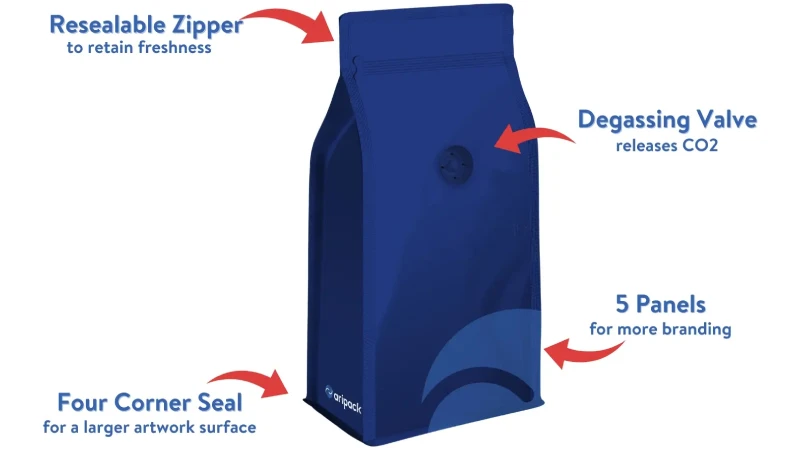
The printing process must also work with different package styles. One format that continues gaining popularity is flat bottom coffee bags, which provide five printable panels instead of the front and back surfaces available on standard pillow pouches. The wider base improves shelf stability while creating additional space for nutritional information, brewing instructions, certifications, roasting dates, and personalized branding without overcrowding the design.
Packaging structure works together with small functional components that customers may never notice. One-way degassing valves are now widely used for freshly roasted coffee because they allow carbon dioxide to escape while preventing oxygen from entering. Freshly roasted coffee can release significant amounts of gas during the first 7–14 days, depending on roast level and bean origin. Without a degassing valve, pressure may build inside sealed packages, while opening the package too early may reduce freshness.
Coffee freshness depends on several packaging characteristics working together rather than one material alone. Barrier layers, sealing quality, degassing valves, and storage conditions all contribute to shelf life.
Different materials also influence transportation efficiency. Flexible pouches weigh much less than rigid containers, reducing shipping costs throughout the supply chain. Packaging industry analyses estimate that flexible packaging can reduce transportation weight by 50–80% compared with metal cans or glass containers while occupying less storage space before filling. Lower transportation weight also contributes to reduced fuel consumption during distribution.
Environmental expectations continue changing purchasing behavior across many markets. Surveys conducted by international consumer research firms during 2023–2025 found that more than 60% of shoppers consider packaging sustainability when comparing similar food products. This has encouraged coffee brands to evaluate recyclable films, compostable materials, water-based inks, and thinner packaging structures that reduce material consumption without sacrificing barrier performance.
Compostable materials have also become available for selected coffee applications. Many use plant-based polymers such as PLA or cellulose films. These materials offer renewable feedstocks, although performance varies depending on humidity, storage duration, filling temperature, and local composting infrastructure. Industrial composting facilities remain necessary in many regions because home compost systems often cannot maintain temperatures required for complete material breakdown.
Material cost should always be evaluated together with product quality. A package that reduces aroma loss, protects against moisture, and survives transportation without damage may cost more per unit, but it can reduce product returns and improve customer satisfaction over the product's shelf life. Many coffee businesses calculate packaging performance by considering shelf stability, shipping distance, production volume, and expected storage time instead of comparing material prices alone.
The most suitable personalized coffee packaging material depends on how the coffee is produced, distributed, displayed, and consumed. Aluminum laminates provide the highest barrier performance for long storage periods, kraft paper supports natural branding when combined with internal barriers, recyclable mono-material films continue expanding across commercial markets, and flexible structures offer excellent printing quality for customized packaging. Matching the material with the product, distribution method, and customer expectations allows packaging to preserve coffee quality while supporting long-term brand consistency.